

Google returns almost 8 million results for the search term " parental controls ." Several of the countless manufacturers, retailers, and distributors are displayed directly. Amazon and other portals also offer an overwhelming number of results, making it easy to get lost.
But how do we, as new parents, grandparents, and the like, approach the topic of child safety in the home?
Some people might start thinking about this even before the baby is born – if a move is on the horizon, the new home might already need to meet certain requirements. Personally, I always approached these new challenges in stages. The first major stage was the birth and organizing the initial baby essentials. After the first few months, I then focused on two bigger issues: weaning and child safety. As soon as my daughter started rolling over and tumbling around the apartment, it was clear: soon nothing would be safe! And above all, I wanted to protect my daughter from potential dangers, since even a moment of inattention can be enough for something to happen.
Since we had little experience with babies and toddlers from our social circle, I first did some reading and then tackled the apartment piece by piece:
1. Inventory & Rearrangement
What is accessible at ground level?
Starting with the electrical outlets, moving on to cables and even plants – I went through all the floors and checked where I needed to tidy away or secure dangling cables, secure electrical outlets, and move plants out of reach. I also put away anything our little one could grab and pull down – for example, a table lamp whose cord hung down next to the table. Since it was quite heavy, I was worried it might fall on our child's head if she pulled on the cord.
I even moved the toilet brush upstairs (I hadn't really thought of that, I only noticed it when it became an object of desire in the bathroom).
Making cabinets and shelves tip-proof: I checked all the cabinets and shelves to see if they could tip over, so I could secure them with anti-tip devices if necessary. This was only the case with one small chest of drawers.
Rearranging the contents of cupboards and shelves: I rearranged all accessible drawers and shelves so that nothing dangerous was within reach. Cleaning supplies, medications, chemicals, and sharp objects went on top. I also stored fragile items out of reach.
2. Use child safety locks
At first I thought, "Oh, that's easy." But then I realized there are so many child safety devices, and I kept wondering what I actually needed and what works best. So I picked up different things from everywhere; after all, everything had to be safe.
But not everything made sense in the end – some things did:
-
Outlet covers : ABSOLUTELY essential. Even though my little one was never interested in them before, there was that one moment when she did try and plug something in. Which isn't surprising at all, because that's all we do: we're constantly plugging and unplugging things from that funny thing in the wall, so little explorers naturally want to investigate it. But not all outlet covers are created equal. There are plug-in ones that have to be removed every time they're used. Those weren't for us, because what happens if the child pulls the plug out and then the outlet is accessible? And after trying them out at home, I also found them impractical. In our new apartment, which we moved into after the birth of our second child, we have childproof outlets that come with built-in child safety locks. A great thing, since they're already there. But completely rewiring our old apartment wasn't an option for us. So we used adhesive and screw-in socket protectors, and that worked really well.
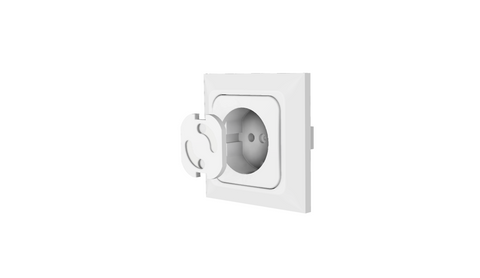
- Corner protectors : Absolutely essential. We installed them, especially on our glass living room table and sideboards. Unfortunately, we ended up having to move our glass table out of the house completely while our little one was learning to walk. This wasn't due to the protectors, but rather because the tabletop would tip over whenever she leaned on it. It was simply too dangerous for us.

- Door finger guards : The time when we had to force doors shut with our fingers caught in the door was short, but these guards were very helpful during that time. We attached the finger guard to the top of the door leaf, closer to the hinge, so pinching on the hinge side was virtually impossible.

- Window safety devices : We installed universal door and window locks on the windows in our children's rooms. For a long time, we thought they couldn't easily reach them, and the windows weren't that easy to open anyway. After the initial shock when our daughter opened the window herself and tried to climb onto the windowsill, we took immediate action. Luckily, we were nearby and heard the window opening, allowing us to react quickly. My friends with windows on the first floor and above, and young children, also immediately secured their windows after our experience. Investing in security in the right places is never a bad idea. It's better to secure things properly beforehand than to risk something bad happening later.
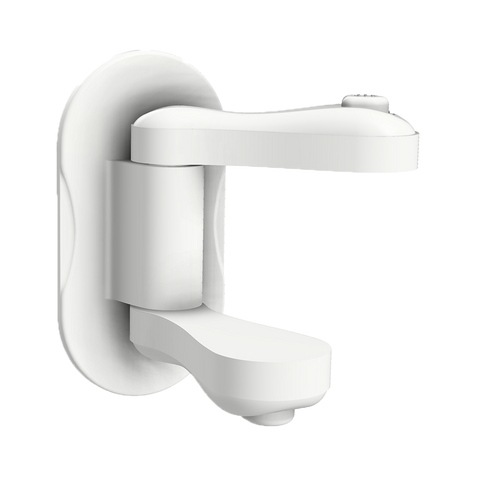
- Cabinet locks : We locked the cabinets that the children shouldn't open – for two different reasons. First, we didn't want our daughter hurting herself on the sideboard doors, as they're heavy and she'd already hurt herself trying to open them. And second, in our small apartment, there was one cabinet whose contents she simply shouldn't be able to open, but we had no alternative way to rearrange or change the layout. At first, it was a bit annoying having to unlock the childproof lock all the time, but after a week we got used to it, and in fact, we didn't remove it at all until our second child was born.

- Stair safety: We didn't have any stairs in our apartment, but at my mom's we secured the rather steep stairs for our visits.
- We looked at some child safety locks for other locks, even tested some, and found out what we didn't need, such as an edge protector (which was just pulled off and chewed).
-
What I, as a mother, always felt was missing on the market was a solution for my charging cable . Most people know that even 5V charging cables should never be used in damp environments – horrific accidents like "Fatal electric shock in the bathtub: When your cell phone becomes a danger to life " are well-known. While nothing should happen with a technically sound 5V system, it does happen. And that's true even here in Germany! If a baby or toddler puts a charging cable in their mouth, exactly this kind of situation can arise. Abroad, there are already known cases of death and severe burns caused by ordinary cell phone charging cables put in the mouths of babies and toddlers. For example, in the USA, there are over 200 serious emergency room visits annually due to charging cable accidents involving babies and toddlers (purely electrical accidents, not strangulation). Alone tragedies? In my opinion, a real danger here in Germany as well. Just as a charging cable can be dangerous in the bathtub, it's not safe for children who put it in their mouths.

My personal conclusion on the topic of "child safety in the home" : Prevention is always better than cure! And something else I've noticed in retrospect: I would have liked a starter kit of child safety devices.
Author: Victoria Blendl